
5 Critical Questions
for a Flood-Resilient Future
Insights from the Holcim Foundation Forum 2025
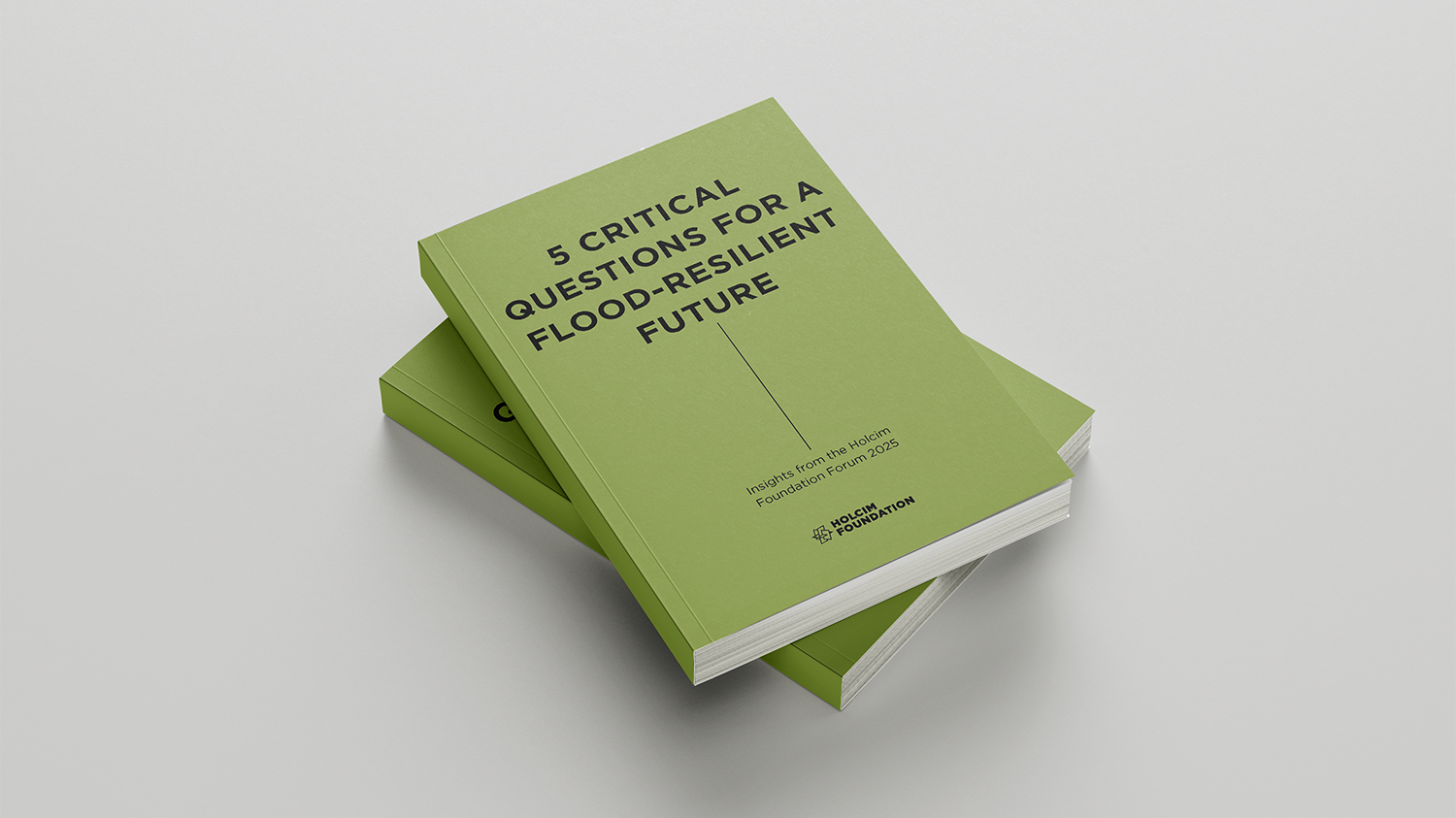
Publication Date: February 2026 | Pages: 47 | Language: English
Executive Summary
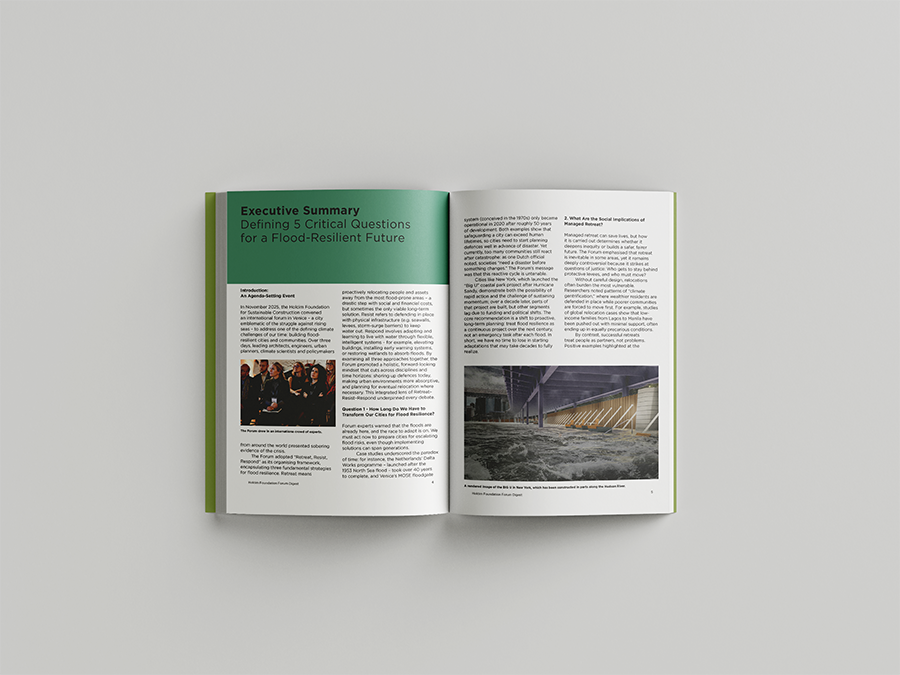
This digest synthesizes insights from the November 2025 Holcim Foundation Forum in Venice, where international experts addressed one of the defining climate challenges of our time: how to build and support flood-resilient cities and communities. The publication examines five critical questions that define the future of climate adaptation in cities worldwide.
Key Questions Addressed:
How long do we have to transform our cities?
What are the social implications of managed retreat?
What role does nature play in flood defense?
Is resilience planning affordable for all nations?
Who should pay for climate adaptation?
The Challenge
Extreme rainfall, rising sea levels, and chronic flooding are reshaping cities, displacing communities, and straining infrastructure systems worldwide. The central challenge is not only defending against water, but adapting cities and societies to live with it long-term.
In November 2025, the Holcim Foundation for Sustainable Construction convened an international Forum in Venice to address this challenge. Held in a city shaped for centuries by its relationship with water, the Holcim Foundation Forum brought together architects, engineers, urban planners, climate scientists, policymakers, and economists from around the world for three days of intensive discussion on flood-resilient cities and communities.
Five Critical Questions Explored
This digest distills the insights from the Forum and is structured around five key questions. Each question spotlights a critical dimension of the flood resilience challenge:
1. How long do we have to transform our cities?
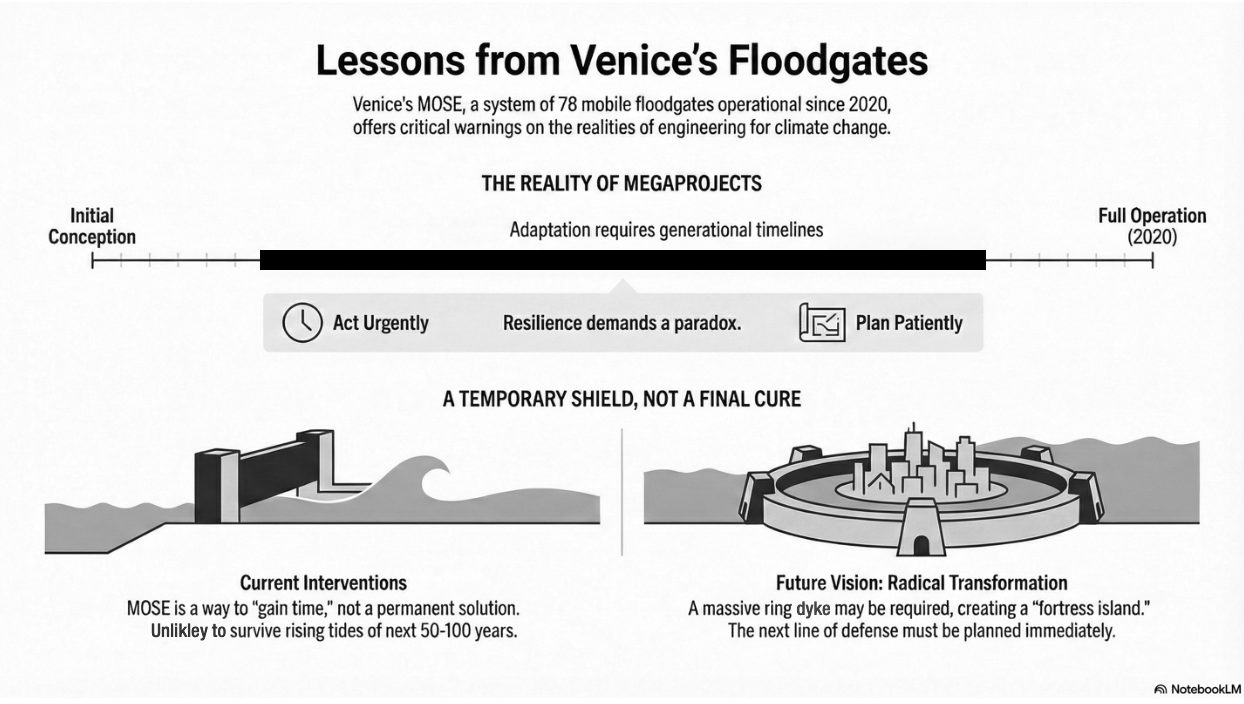
The floods are already here, and transformation takes decades. Projects like the Netherlands' Delta Works required 40+ years to complete, while Venice's MOSE took 50 years from conception to operation—yet both are already facing obsolescence as climate impacts accelerate.
2. What are the social implications of managed retreat?
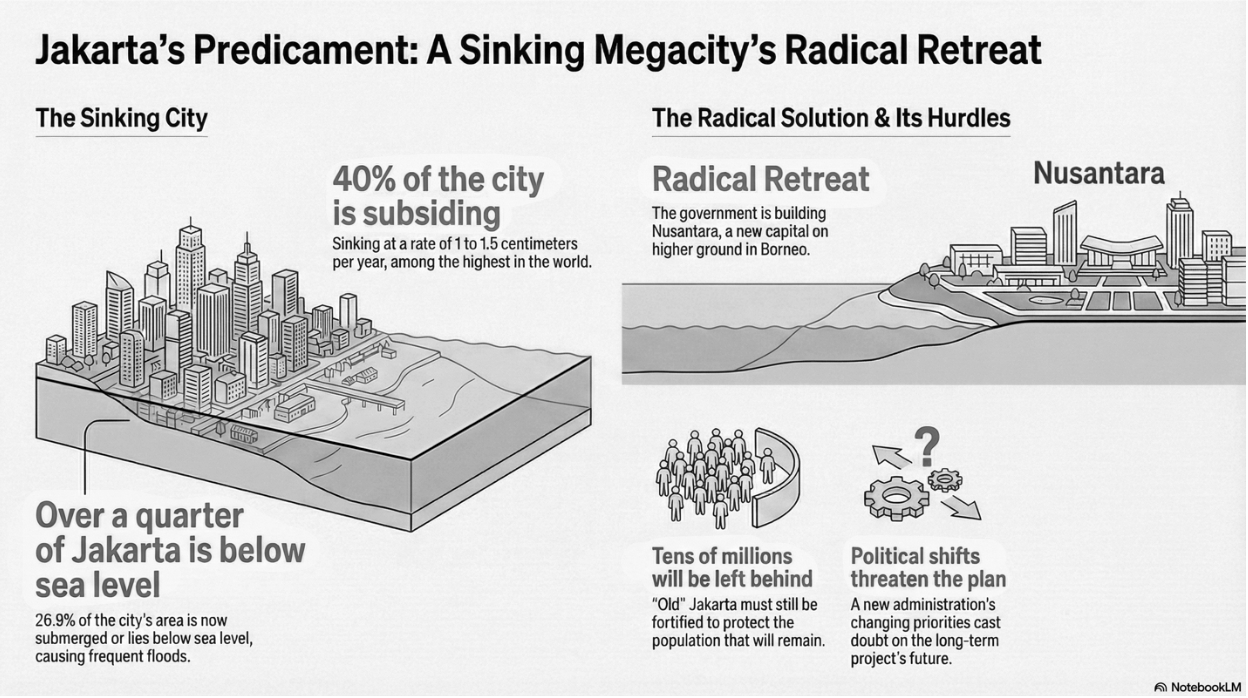
Retreat is inevitable in some areas, but without careful design it deepens inequality—wealthy residents stay protected while vulnerable communities are displaced. Successful examples show that community-led, well-resourced relocations can become platforms for social justice rather than instruments of injustice.
3. What role does nature play in flood defense?
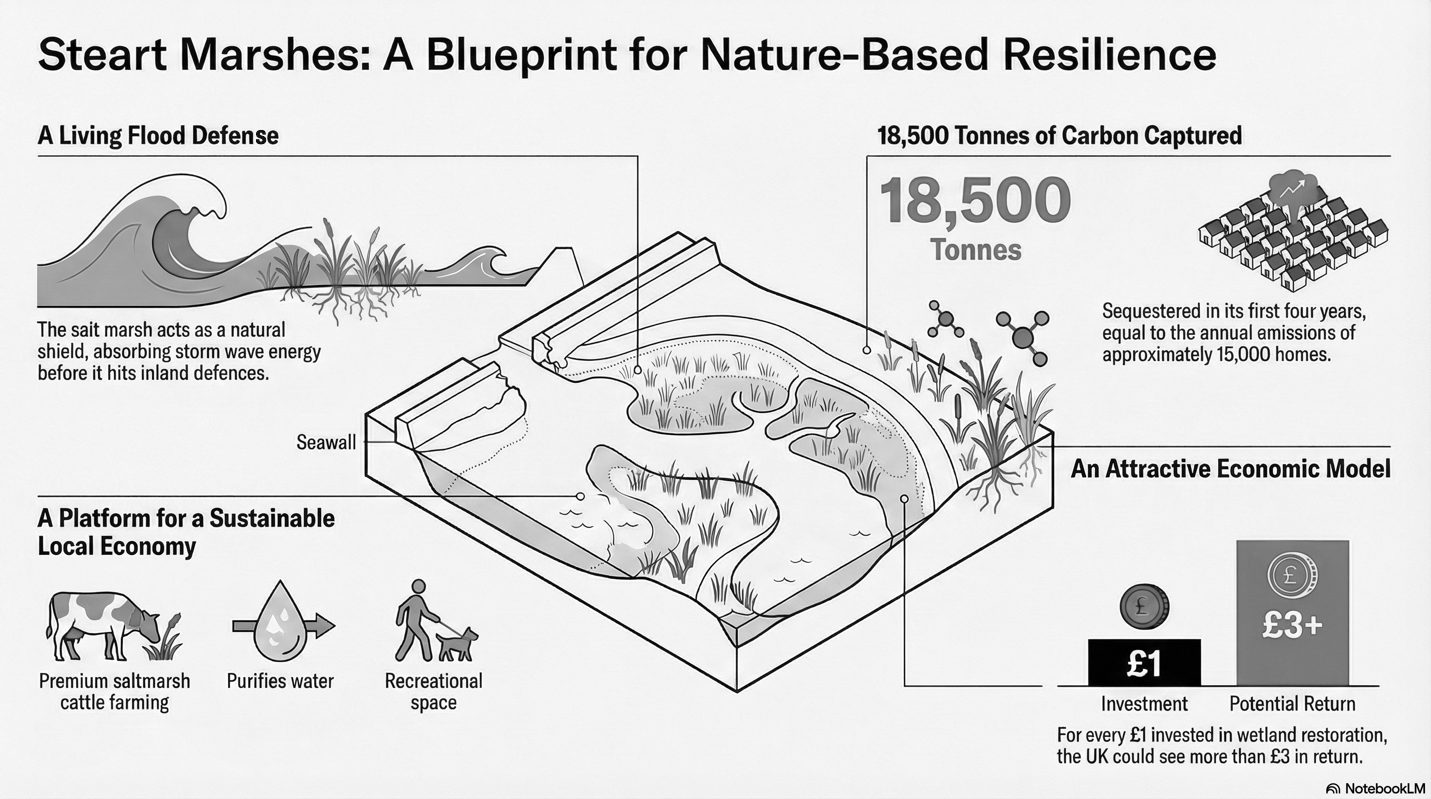
Natural systems have evolved from amenities to essential infrastructure. Wetlands, mangroves, and restored floodplains absorb storm surges, sequester carbon, and can adapt to rising seas—delivering multiple benefits while attracting investment from insurers seeking to reduce future claims.

4. Is resilience planning affordable for all nations?
Resilience isn't a luxury—it's strategic triage. The real challenge is prioritizing limited resources: identify the 1% of critical infrastructure whose failure would cascade across systems, protect those nodes first, and accept that not everything can be defended.
5. And who should pay for it?
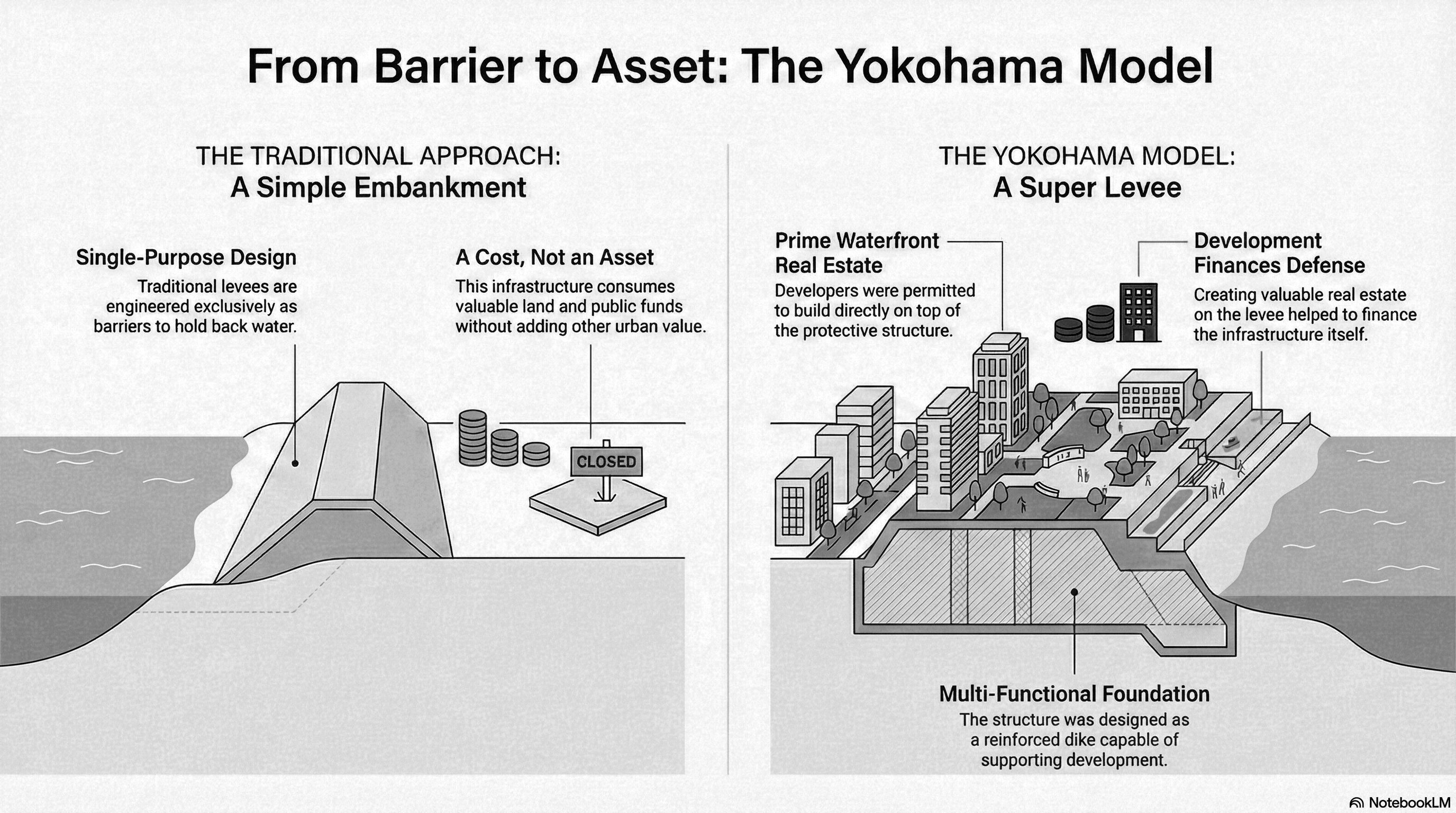
Everyone ultimately pays—whether through taxes, insurance premiums, or private investment—but the structure matters. The money exists and private capital is available; what's missing are well-prepared, "bankable" projects that demonstrate measurable risk reduction.
FORUM
VOICES
The Holcim Foundation Forum brought together leading practitioners and scholars working across climate science, engineering, urban planning, design, governance, and finance. Their perspectives reflect the breadth of expertise required to address flood resilience — from long-term infrastructure planning and nature-based solutions to questions of equity, governance, and risk.
Contributors featured in this publication include Justin Abbott (Arup), Jola Ajibade (Emory University), Kate Ascher (Columbia University GSAPP), Maria Atkinson (Holcim Foundation, former chair), Karina Barquet (Stockholm Environment Institute), Ana P. Barros (University of Illinois Urbana-Champaign), Kai-Uwe Bergmann (BIG – Bjarke Ingels Group), Hanna Billmayer (City of Halmstad, Sweden), Matthijs Bouw (One Architecture and Urbanism), Pierpaolo Campostrini (CORILA – Venice Lagoon Research Consortium), Alice Charles (Arup), Craig Dykers (Snøhetta), Anne-Marie Hitipeuw (Dutch Ministry of Infrastructure and Water Management), Nirmal Kishnani (National University of Singapore), Alys Laver (Wildfowl & Wetlands Trust), Stefan Rahmstorf (Potsdam Institute for Climate Impact Research), Sofian Sibarani (URBAN+), Daniel Stander (Resilient Cities Network / Climate Resilience Center), Michael Szönyi (Zurich Climate Resilience Alliance / Z Zurich Foundation), Thomas Thaler (BOKU University Vienna / IIASA), and Chris Zevenbergen (IHE Delft / TU Delft).
Access the Full Publication
Interactive Digital Edition - Enhanced reading experience with embedded media
PDF Download - Standard format for archival and citation
How to Cite: Holcim Foundation for Sustainable Construction (2026). 5 Critical Questions for a Flood-Resilient Future: Insights from the Holcim Foundation Forum 2025. Zurich: Holcim Foundation.
Related Resources
Watch Forum Talks - Video presentations from all speakers
Explore Speaker Profiles - Detailed biographies and affiliations
About the Forum - Background and objectives
Keywords: climate adaptation, flood resilience, urban planning, nature-based solutions, managed retreat, climate finance, sustainable construction, coastal cities, infrastructure, Venice
Purpose of This Publication
We hope the questions and perspectives gathered here support decision-making, sharpen judgment, and encourage approaches to flood resilience that are technically robust, socially responsible, and grounded in long-term thinking.